Definition
Pneumatic conveying is understood to mean the movement of solid bulk particles suspended in a gaseous medium, generally air. A simple example of pneumatic conveying by suction or vacuum is a domestic vacuum cleaner: the air is sucked from the ground through the tube to the collection bag, bring the dust particles with it in the air stream.
Industrial pneumatic conveying facilities can work under positive pressure or vacuum, and with different pressures produced by fans, blowers or compressors.
Applications
Below are some of the many examples of applications of pneumatic transport:
- Loading and unloading of silos and hoppers.
- Distribution of materials from a warehouse or storage area to different points of use.
- Truck Loading and unloading.
- Evacuation of production waste, ash, sawdust, shavings.
- Transport of dust collected in a cyclone type collector, bag filter or electrofilter to a silo or storage tank.
Advantages of pneumatic transport
- Complete sealing of the product during transport, eliminating product losses and creating a clean workplace environment.
- Easy automation.
- Low maintenance costs as there are no parts subject to constant friction.
- Surface occupied considerably less than that of any equivalent mechanical conveyor.
- Cost reduction.
Products that can be transported pneumatically
GORCO is capable of offering pneumatic conveying facilities for many materials:
CEMENT · BAUXITE · ALUMINA · COAL · PYRITES · LIMESTONE · LIME · QUARTZ · SODA · METAL OXIDES · ASH · SAWDUST · WOOD · RUBBER · PLASTICS IN PELLETS OR POWDER · PIGMENTS · FOOD PRODUCTS · DETERGENTS
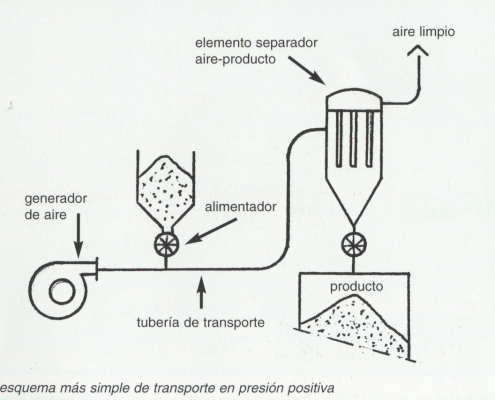
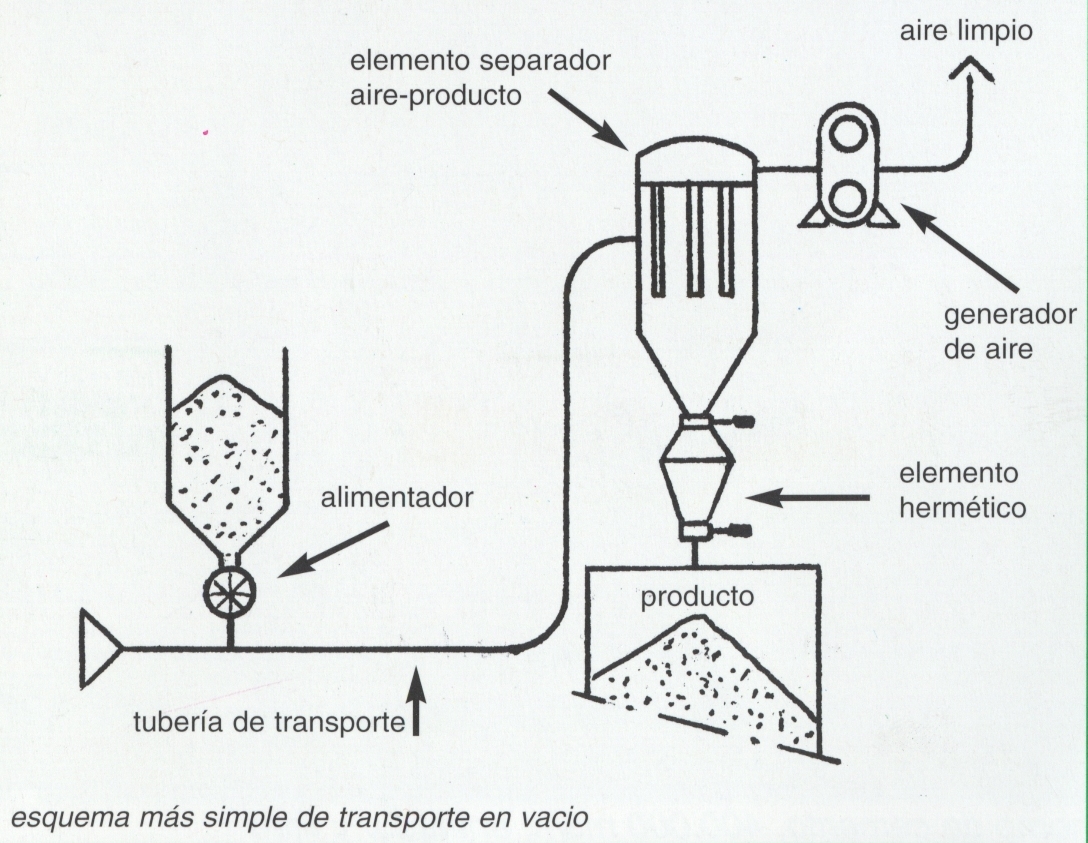
Positive or negative (suction) pressure
GORCO supply
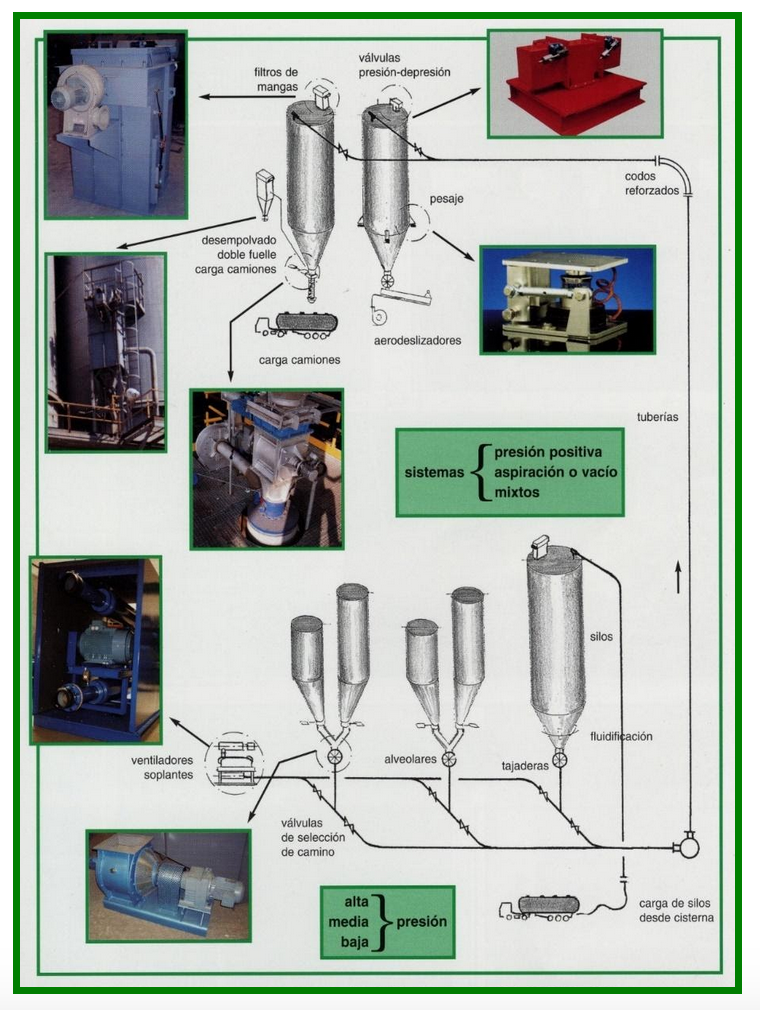
GORCO can offer complete facilities or supply individual components; see diagram: